
CLEFT LIP & PALATE
Understanding Cleft Lip & Palate Conditions
Cleft lip and cleft palate are congenital conditions that occur when the tissues forming the lip and/or roof of the mouth do not completely join during early fetal development. These conditions can affect facial development, feeding, speech, dental growth, jaw development, and oral function. Treatment is typically provided over multiple stages as a child grows and may involve oral and maxillofacial surgeons, orthodontists, pediatric dentists, speech specialists, otolaryngologists, and other members of a multidisciplinary cleft care team.
Because cleft conditions can affect the teeth, jaws, facial bones, and surrounding oral structures, treatment may involve several different types of surgical and orthodontic care. An individualized treatment plan helps address each patient's needs as their facial and dental development progresses.
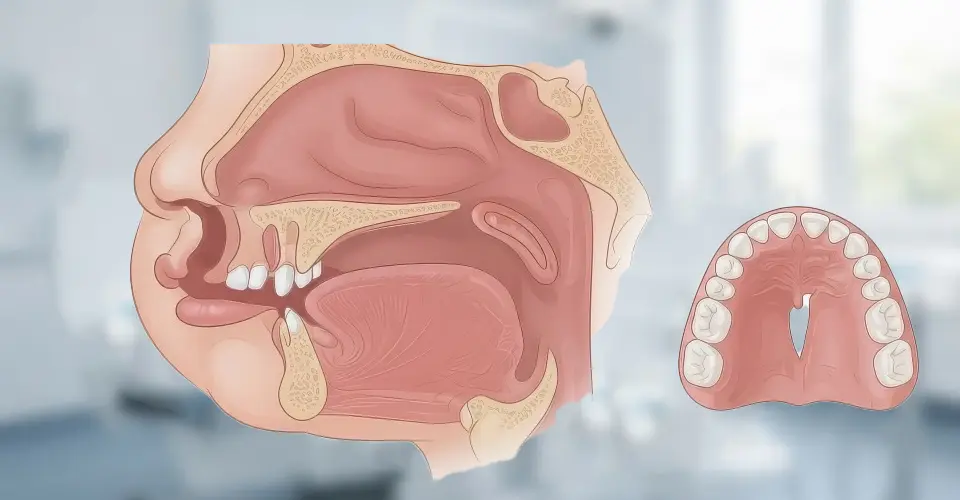
Types of Cleft Conditions & Specialized Surgical Care
A cleft lip occurs when the tissues forming the upper lip do not completely fuse during development, resulting in an opening or separation in the lip. A cleft palate occurs when the tissues forming the roof of the mouth do not fully join, creating an opening between the mouth and nasal cavity. Some children have a cleft lip, some have a cleft palate, and others have both conditions. Clefts can range from relatively small openings to more extensive differences involving the lip, palate, gum, and underlying jawbone.
Oral and maxillofacial surgeons contribute specialized expertise in the treatment of conditions involving the jaws, facial bones, teeth, and oral structures. Depending on a patient's individual needs and stage of development, surgical care may include procedures involving the alveolar ridge, jaw development, tooth position, or corrective jaw surgery. Treatment recommendations are based on the patient's anatomy, growth, dental development, and overall treatment plan.
Functional Effects & Staged Treatment
Cleft conditions can affect more than facial appearance. Depending on the type and severity of the cleft, children may experience challenges with feeding, speech development, hearing, dental eruption, tooth alignment, and normal jaw growth. Early evaluation and continued monitoring help the care team identify developing concerns and determine when treatment may be most appropriate.
Cleft treatment is generally planned in stages that correspond with a patient's growth and development. Surgical procedures may be performed during infancy and childhood, while additional procedures may become appropriate later as the jaws, teeth, and facial structures mature. Not every patient requires the same procedures, and the timing of treatment is individualized based on the patient's specific condition and multidisciplinary treatment plan.
Cleft Lip & Palate Repair
Cleft lip repair involves carefully reconstructing the tissues of the upper lip to restore continuity, function, and facial symmetry. Surgical planning takes into account the patient's anatomy and developmental stage. Precise alignment of the muscles and soft tissues is important for both lip function and the appearance of the repaired area.
Cleft palate repair is designed to close the opening between the mouth and nasal cavity and restore the muscular structures involved in speech and swallowing. Proper repair can help separate the oral and nasal cavities and provide an improved foundation for normal oral function and speech development. The timing and specific technique are determined according to the child's individual needs and overall cleft treatment plan.
Alveolar Bone Grafting & Jaw Development
Some patients with cleft conditions develop a gap in the alveolar bone, which is the portion of the jaw that supports the teeth. Alveolar bone grafting can be used to place bone into this area and create a more stable foundation for tooth eruption and orthodontic treatment. The timing of an alveolar bone graft is carefully coordinated with dental development and the eruption of the permanent teeth.
As patients with cleft conditions mature, differences in upper and lower jaw growth may contribute to an improper bite or facial imbalance. In selected patients, corrective jaw surgery, also called orthognathic surgery, may be recommended after facial growth is substantially complete. This procedure can reposition the jaws to improve bite function, facial balance, and the relationship between the upper and lower jaws.
3D Imaging & Comprehensive Treatment Planning
Advanced imaging can provide valuable information when planning surgical treatment for patients with cleft conditions. Three-dimensional cone beam computed tomography (CBCT) may allow the surgical team to evaluate bone anatomy, tooth development, jaw relationships, and other structures that are difficult to assess with traditional two-dimensional imaging alone.
Digital imaging and treatment planning can be particularly useful when evaluating areas affected by the cleft or preparing for procedures such as alveolar bone grafting and corrective jaw surgery. Imaging findings are considered together with clinical examinations, dental records, orthodontic treatment, and the patient's stage of growth.
Multidisciplinary Care & Individualized Treatment
Cleft lip and palate treatment often requires long-term coordination between multiple specialists. Depending on the patient's needs, the treatment team may include oral and maxillofacial surgeons, plastic surgeons, orthodontists, pediatric dentists, speech-language specialists, otolaryngologists, and other healthcare professionals. Each specialist addresses a different aspect of development and treatment while working toward a coordinated overall plan.
Every cleft condition is different, and treatment is customized according to the location and extent of the cleft, facial growth, dental development, jaw relationships, and individual treatment needs. Some patients may require only a limited number of procedures, while others may need several stages of surgical and orthodontic care throughout childhood and adolescence.
For patients who require oral and maxillofacial surgical treatment, careful evaluation and long-term planning can help address changes involving the jaws, teeth, facial bones, and oral structures. Advanced imaging, surgical techniques, and coordinated specialist care provide important tools for managing the complex needs that can accompany cleft lip and palate conditions.
If your child has a cleft lip, cleft palate, or a related facial and jaw condition, an evaluation with an oral and maxillofacial surgeon can help determine which surgical considerations may apply and how oral surgical care may fit into the broader treatment plan.
Specialized Cleft Lip & Palate Care in West Virginia
Cleft lip and palate treatment requires careful coordination, long-term planning, and specialized knowledge of facial and oral development. By combining advanced imaging, surgical expertise, and multidisciplinary care, treatment can be tailored to address the unique needs of each patient as they grow.
At Mountaineer Oral & Maxillofacial Surgeons, our team provides specialized oral and maxillofacial surgical care for patients in Charleston, Ripley, and surrounding West Virginia communities. If your child has a cleft lip, cleft palate, or a related jaw and facial condition, our team can evaluate their surgical needs and help coordinate care as part of their broader treatment plan.