
CORRECTIVE JAW SURGERY
Understanding Corrective Jaw Surgery
Corrective jaw surgery, also known as orthognathic surgery, is a specialized procedure used to correct irregularities in the position and development of the upper jaw, lower jaw, or both. When the jaws do not align properly, patients may experience difficulty chewing, speaking, breathing, or maintaining a comfortable bite. Corrective jaw surgery addresses the underlying skeletal relationship between the jaws and teeth to improve function, facial balance, and long-term oral health.
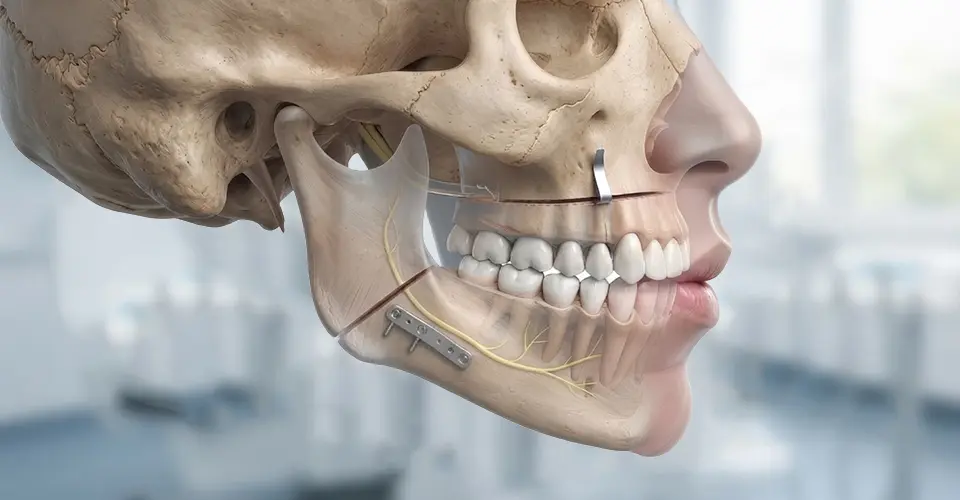
Jaw Alignment Problems & Orthognathic Evaluation
Oral and maxillofacial surgeons receive extensive training in dental, facial, and skeletal surgery, making them specially qualified to evaluate complex jaw alignment problems. Treatment begins with a comprehensive examination of the teeth, jaws, facial structure, bite, and jaw function. Advanced imaging and digital treatment planning may also be used to evaluate the position of the jaws and surrounding anatomy.
Jaw alignment problems may develop because of differences in facial growth, congenital conditions, trauma, or other changes affecting the structure of the jaws. Common concerns include severe overbite, underbite, crossbite, open bite, facial asymmetry, difficulty bringing the lips together, and a bite that cannot be corrected with orthodontic treatment alone.
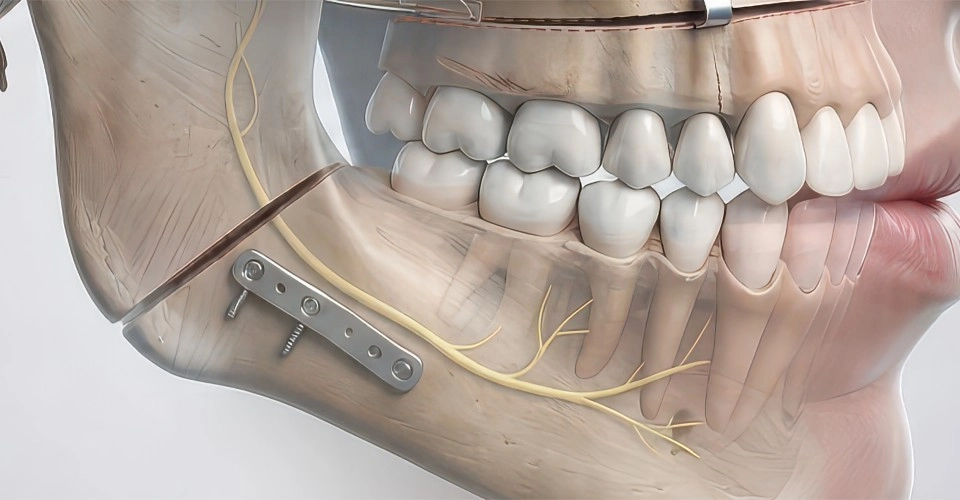
Functional Concerns & Comprehensive Jaw Evaluation
Jaw alignment problems can affect much more than appearance. An improperly positioned jaw may interfere with chewing, speaking, oral hygiene, and normal jaw function. Some patients may also experience uneven tooth wear, jaw discomfort, headaches, facial imbalance, or strain involving the temporomandibular joints. Corrective jaw surgery focuses on the underlying skeletal problem rather than simply treating individual symptoms.
Evaluation may include a detailed examination, digital photographs, bite analysis, and advanced 3D imaging. Cone beam computed tomography (CBCT) provides detailed information about the jaws, teeth, nerves, and surrounding structures. This information helps your oral surgeon understand your anatomy and develop a treatment plan based on your individual needs.
Orthodontic Coordination & Surgical Planning
Orthognathic surgery is often performed in coordination with orthodontic treatment. In many cases, braces or clear aligners are used before surgery to properly position the teeth so they can fit together correctly after the jaws are repositioned. Additional orthodontic treatment may be needed following surgery to fine-tune the bite and support a stable long-term result. Your oral surgeon and orthodontist work together throughout the treatment process to coordinate your care.
During corrective jaw surgery, the upper jaw, lower jaw, or both may be repositioned depending on the patient's specific condition. The bones are carefully moved into the planned position and secured with small plates and screws to provide stability during healing. The goal is to establish a more functional relationship between the jaws while improving chewing, speech, facial balance, and overall jaw function.
Who May Benefit From Corrective Jaw Surgery?
Corrective jaw surgery may be recommended for patients with significant jaw alignment or bite problems, including severe overbite, underbite, crossbite, open bite, facial asymmetry, abnormal jaw growth, or certain trauma-related deformities. In some cases, jaw surgery may also be considered when the position of the jaws contributes to airway or breathing concerns.
Not every jaw alignment problem requires surgery. Some bite and alignment concerns can be treated successfully with orthodontics alone. A comprehensive evaluation allows your oral surgeon to determine whether surgery may be appropriate and how it can be coordinated with other aspects of your treatment.
3D Imaging & Virtual Surgical Planning
Modern digital technology plays an important role in planning corrective jaw surgery. Three-dimensional imaging allows your surgical team to evaluate the position of the jaws, teeth, facial bones, nerves, and other important structures in greater detail. Virtual surgical planning can then be used to evaluate proposed jaw movements and develop a customized surgical approach.
This detailed planning helps your surgeon prepare for the specific anatomy and movements involved in your procedure. It also provides an opportunity to explain the treatment process and anticipated changes before surgery so that you have a clearer understanding of your care.
Recovery & Long-Term Jaw Function
Recovery from corrective jaw surgery varies depending on the type and complexity of the procedure. Swelling, soreness, and changes in eating or speaking are common during the early stages of recovery. Patients typically follow a modified diet while the jaws heal and gradually return to normal activities according to their surgeon's instructions.
Follow-up appointments are an important part of the healing process. Your surgical team will monitor the position of the jaws, healing of the surgical sites, and overall progress throughout recovery. Orthodontic treatment may continue after surgery to refine the bite and help achieve the planned functional result.
The goal of corrective jaw surgery is to establish a healthier and more functional relationship between the jaws and teeth. Depending on the patient's individual condition, treatment may improve chewing, speaking, jaw function, facial balance, and other concerns associated with significant jaw misalignment.
Personalized Orthognathic Care in West Virginia
Corrective jaw surgery is a highly individualized treatment because every patient's facial structure, jaw development, bite, and functional concerns are different. Your oral and maxillofacial surgeon will evaluate your specific needs, explain the available treatment options, and coordinate care with your orthodontist when appropriate.
At Mountaineer Oral & Maxillofacial Surgeons, our team combines specialized surgical training, advanced imaging, digital treatment planning, and personalized patient care to treat complex jaw alignment conditions. Patients in Charleston, Ripley, and surrounding West Virginia communities can receive comprehensive evaluation and surgical care from an experienced oral and maxillofacial surgery team.
If jaw alignment is affecting your bite, comfort, facial balance, or ability to perform everyday activities, a consultation can help determine whether corrective jaw surgery may be appropriate for you. Our goal is to provide thoughtful treatment planning and surgical care focused on improving function, stability, and your long-term oral health.