
SLEEP APNEA EVALUATION & TREATMENT
Understanding Sleep Apnea & Airway Health
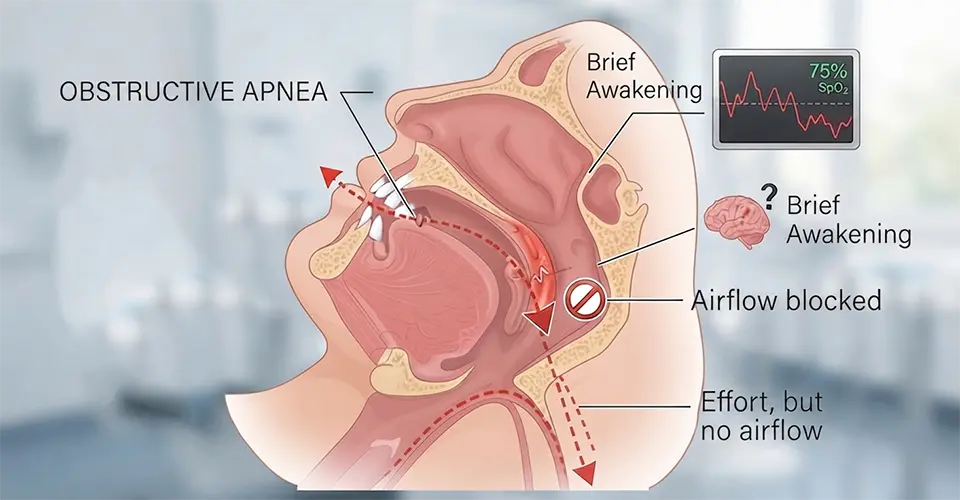
Sleep apnea is a condition in which breathing repeatedly becomes interrupted or restricted during sleep. Obstructive sleep apnea, the most common form, occurs when the tissues of the throat and upper airway become blocked or collapse during sleep. This can lead to loud snoring, pauses in breathing, restless sleep, morning headaches, daytime fatigue, and difficulty concentrating. Because the anatomy of the jaws, tongue, and airway can contribute to obstruction, oral and maxillofacial surgeons play an important role in evaluating patients with sleep-related breathing disorders.
A comprehensive sleep apnea evaluation begins with a detailed review of your symptoms, medical history, sleep patterns, and airway anatomy. Your oral and maxillofacial surgeon may evaluate jaw position, facial structure, tongue position, airway dimensions, and other factors that can contribute to airway obstruction. Advanced imaging, including 3D CBCT scans, may be used to assess airway anatomy and assist with treatment planning. Learn more about this technology on our 3D Imaging page.
Non-Surgical Treatment & Comprehensive Care
Treatment for sleep apnea depends on the type and severity of the condition, as well as the underlying cause. Many patients begin treatment with non-surgical approaches such as lifestyle changes, positive airway pressure therapy such as CPAP, or oral appliance therapy. Oral appliances can help reposition the jaw or tongue to maintain a more open airway during sleep and may be appropriate for certain patients with obstructive sleep apnea.
When sleep apnea is related to the position of the jaws or other structural features of the face and airway, surgical treatment may be considered. Oral and maxillofacial surgeons have specialized training in facial skeletal surgery and can evaluate whether anatomical factors may be contributing to airway obstruction. A detailed evaluation helps determine whether surgical treatment or another approach may be appropriate. For more information about surgical procedures involving the jaws, visit our Jaw Surgery page.
Maxillomandibular Advancement & Airway Surgery
Maxillomandibular advancement (MMA) is a specialized surgical procedure used to treat certain cases of obstructive sleep apnea. During MMA surgery, the upper jaw (maxilla) and lower jaw (mandible) are repositioned forward to increase the space available within the upper airway. By improving the relationship between the jaws and surrounding soft tissues, MMA can help reduce airway obstruction during sleep in appropriately selected patients.
Because MMA involves repositioning the facial bones, careful evaluation and surgical planning are essential. Your oral and maxillofacial surgeon will consider your airway anatomy, jaw position, facial structure, medical history, and previous sleep apnea treatments when determining whether this procedure may be appropriate for you. If surgery is recommended, your surgeon will also discuss appropriate anesthesia and sedation options based on the procedure and your individual needs.
3D Imaging & Virtual Surgical Planning
Advanced imaging can provide valuable information when evaluating patients with obstructive sleep apnea. Three-dimensional cone beam computed tomography (CBCT) can help your oral surgeon examine the jaws, facial structures, airway, and surrounding anatomy in greater detail. This information can be used to identify anatomical factors that may contribute to airway restriction and assist with treatment planning.
For patients who may benefit from surgical treatment, digital and virtual surgical planning can help the surgical team evaluate proposed jaw movements before treatment begins. This technology allows the procedure to be planned around the patient's individual anatomy and can improve surgical precision and predictability.
To learn more about how CBCT technology is used to evaluate the jaws, teeth, facial structures, and surrounding anatomy, visit our 3D Imaging page.
Coordinated Care & Treatment Options
Sleep apnea often requires a multidisciplinary approach. Depending on your individual circumstances, oral and maxillofacial surgeons may work with sleep medicine physicians, ENT specialists, orthodontists, dentists, and other healthcare providers. Coordinated care allows the underlying causes of sleep-disordered breathing to be evaluated from multiple perspectives and helps ensure that treatment recommendations are based on your specific needs.
Patients who continue to experience symptoms despite using CPAP or other treatments may benefit from additional evaluation. Structural factors involving the jaws, tongue, nasal passages, or airway may play a role in persistent obstruction. An oral and maxillofacial surgeon can help determine whether facial skeletal anatomy may be contributing to the condition and whether additional treatment options should be considered.
Improving Sleep & Quality of Life
Effective treatment for obstructive sleep apnea may improve sleep quality and help reduce symptoms such as loud snoring, daytime fatigue, morning headaches, and difficulty concentrating. Because untreated sleep apnea can affect more than just sleep, receiving an appropriate evaluation and treatment plan is an important part of protecting long-term health and well-being.
If you experience symptoms of sleep apnea, have been diagnosed with obstructive sleep apnea, or continue to struggle with treatment, an evaluation with an experienced oral and maxillofacial surgeon may help identify additional options. Through advanced imaging, personalized treatment planning, and specialized surgical expertise, our team can help evaluate whether jaw and airway anatomy may be contributing to your condition.
Specialized Sleep Apnea Care in West Virginia
Sleep apnea is more than a nighttime inconvenience. For patients with obstructive sleep apnea, repeated airway obstruction can interfere with restorative sleep and affect daily quality of life. A comprehensive evaluation can help identify the factors contributing to airway obstruction and determine which treatment options may be appropriate.
At Mountaineer Oral & Maxillofacial Surgeons, our team uses advanced imaging, detailed treatment planning, and specialized surgical expertise to evaluate patients with sleep-related breathing concerns. For patients whose condition is influenced by jaw or facial skeletal anatomy, surgical treatment may provide an additional option when appropriate.
If you are seeking an evaluation for sleep apnea or have questions about whether jaw anatomy may be contributing to your condition, our team can help you understand the available treatment options and determine the appropriate next step.