
Wisdom Teeth Removal
Wisdom Teeth Removal in West Virginia
Wisdom teeth, also known as third molars, are the last permanent teeth to develop and typically emerge between the ages of 17 and 25. While some wisdom teeth grow in normally and function without causing problems, many people do not have enough room in their jaws to accommodate these additional teeth.
When wisdom teeth do not have enough room to erupt properly, they may become impacted, meaning they remain trapped beneath the gums or jawbone or only partially emerge. Impacted wisdom teeth can contribute to pain, infection, tooth decay, gum disease, damage to neighboring teeth, and other oral health problems. For these reasons, wisdom teeth removal is one of the most common procedures performed by oral and maxillofacial surgeons.
Why Do Wisdom Teeth Need to Be Removed?
Wisdom teeth do not always need to be removed. Your oral surgeon will evaluate the position, development, and condition of your third molars to determine whether removal is recommended. When wisdom teeth are impacted, difficult to clean, or likely to cause future problems, removing them may help protect your long-term oral health.
Even wisdom teeth that are not currently painful can sometimes cause problems. Because they are located at the very back of the mouth, they can be difficult to brush and floss properly. Food and bacteria may become trapped around partially erupted teeth, increasing the risk of cavities, gum disease, and infection. Regular dental examinations and appropriate imaging can help identify developing problems before symptoms become severe.
Impacted Wisdom Teeth
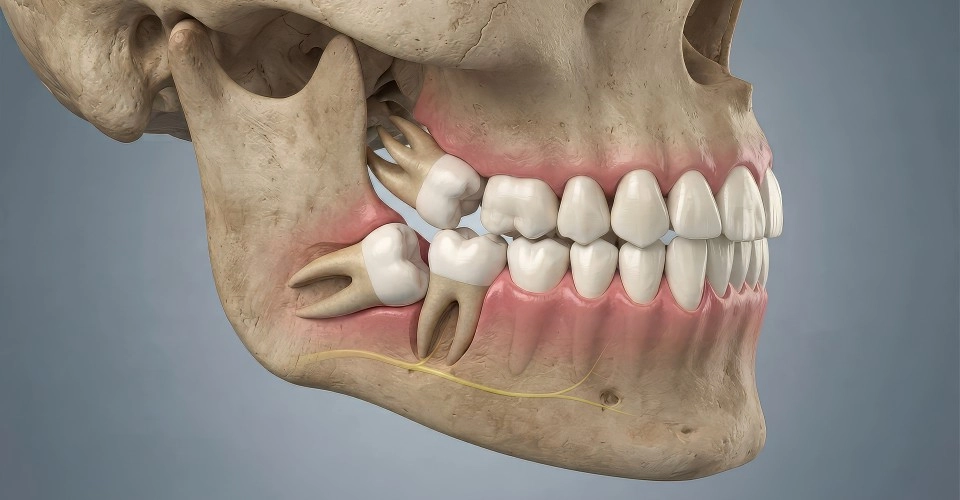
Impacted wisdom teeth can develop in several different ways. Some remain completely buried beneath the gums and jawbone, while others partially erupt through the gums. Wisdom teeth may also grow at an angle and push against neighboring teeth or surrounding bone.
As impacted wisdom teeth continue to develop, they may contribute to pressure on adjacent molars, damage to neighboring tooth roots, infection, cavities, gum disease, or cyst formation. When unusual tissue or lesions are identified, additional evaluation may be necessary. Learn more about the diagnosis and treatment of oral lesions on our Oral Pathology page.
In some cases, removal at a younger age may be recommended because the teeth and surrounding structures are still developing. However, the appropriate timing for removal varies from patient to patient and depends on factors such as tooth position, root development, available jaw space, and overall oral health.
Evaluation & 3D Imaging
Your oral surgeon will perform a comprehensive examination to evaluate the position and development of your wisdom teeth. Dental X-rays and, when appropriate, advanced 3D CBCT imaging can provide detailed information about the teeth, surrounding bone, neighboring teeth, sinuses, and nearby nerves.
This information helps your surgeon determine whether wisdom tooth removal is recommended and allows the procedure to be carefully planned around the patient's individual anatomy. Because every patient is different, your treatment plan will be based on the specific position and development of your wisdom teeth.
For more information about the technology used to evaluate dental and facial structures, visit our 3D Imaging page.
Anesthesia & Sedation Options
Wisdom tooth removal is performed using anesthesia and sedation options selected according to the complexity of the procedure, the patient's medical history, and individual comfort needs. Depending on the circumstances, options may include local anesthesia, nitrous oxide, intravenous (IV) sedation, or general anesthesia.
Your oral surgeon will discuss the appropriate anesthesia plan with you before surgery and provide instructions to help you prepare. The goal is to keep you comfortable and closely monitored throughout your procedure.
Learn more about the anesthesia and sedation options available for oral surgery on our Anesthesia page.
What Happens During Wisdom Teeth Removal?
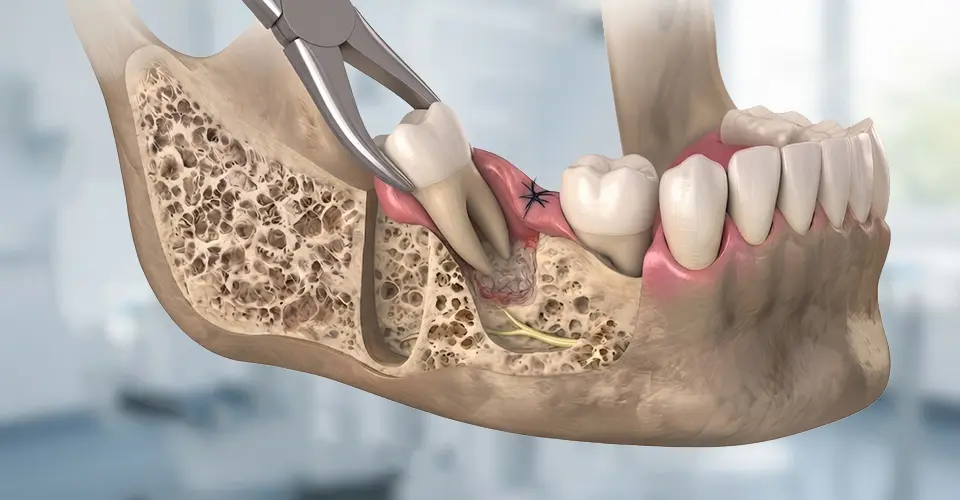
Wisdom tooth removal is a specialized form of tooth extraction performed when third molars are impacted, difficult to access, or likely to cause problems. During surgery, your oral surgeon carefully removes the wisdom teeth while protecting the surrounding bone, gums, nerves, and neighboring teeth.
For an impacted wisdom tooth, the surgeon may make a small opening in the gum and remove a limited amount of surrounding bone to access the tooth. In some cases, the tooth may be divided into smaller sections to allow it to be removed safely and efficiently.
The surgical approach is carefully planned based on the patient's anatomy and the position of each wisdom tooth. This individualized approach helps minimize unnecessary trauma to surrounding tissues and supports a predictable recovery.
Recovery After Wisdom Teeth Removal
Some swelling, soreness, jaw stiffness, and tenderness are normal after wisdom tooth removal. These symptoms generally improve as healing progresses and can often be managed with the medications and recovery instructions provided by your surgical team.
Many patients return to school, work, or other normal activities within a few days, although recovery time varies depending on the number and position of the teeth removed and the complexity of the surgery. Following your post-operative instructions closely can help support proper healing.
During the initial recovery period, patients are generally advised to eat softer foods, stay hydrated, avoid smoking, and avoid using straws if instructed by their surgical team. Gentle oral hygiene is also important, but the surgical areas should be treated carefully while they heal.
Preventing Complications During Recovery
Following your oral surgeon's aftercare instructions is an important part of the recovery process. Patients should avoid activities that can disturb the surgical sites and should follow instructions regarding food, oral hygiene, medications, and physical activity.
A condition known as dry socket can occasionally occur after tooth extraction when the blood clot that normally protects the healing socket becomes displaced or breaks down too early. Avoiding smoking, using straws, and other activities that may disturb the surgical sites can help reduce the risk.
If you experience symptoms that concern you during recovery, such as worsening pain, significant swelling, persistent bleeding, fever, or other unusual symptoms, contact your oral surgeon for guidance.
When Should Wisdom Teeth Be Removed?
There is no single age or timeline that applies to every patient. Some wisdom teeth can be monitored without removal, while others may benefit from treatment before they cause pain or other complications.
Your dentist or oral surgeon may recommend an evaluation if you experience jaw pain, swelling, recurring infections, difficulty opening your mouth, tenderness around the back teeth, or other changes involving your wisdom teeth. An evaluation can also be appropriate when dental imaging shows that wisdom teeth are impacted or developing in a position that may create future problems.
Early evaluation allows your oral surgeon to monitor the teeth and discuss treatment options before a problem becomes more complicated.
Expert Wisdom Teeth Care in West Virginia
Mountaineer Oral & Maxillofacial Surgeons provides evaluation and surgical treatment for wisdom teeth patients in Charleston, Ripley, and surrounding communities throughout West Virginia. Our surgeons use advanced imaging, careful surgical planning, and individualized anesthesia options to provide appropriate treatment based on each patient's needs.
Whether your wisdom teeth are causing symptoms or have been identified as a potential future concern, an evaluation can help you understand your options and determine whether removal or continued monitoring is appropriate.