
TEMPOROMANDIBULAR JOINT (TMJ) DISORDERS
Understanding TMJ Disorders
Temporomandibular joint (TMJ) disorders are conditions that affect the jaw joints, surrounding muscles, and supporting tissues responsible for opening, closing, and moving the jaw. The temporomandibular joints connect your lower jaw to your skull and allow you to perform everyday movements such as speaking, chewing, yawning, and smiling. When these joints become damaged, inflamed, or improperly aligned, patients may experience jaw pain, clicking or popping sounds, difficulty opening the mouth, headaches, facial discomfort, and changes in their bite.
Specialized Training & Comprehensive Evaluation
Oral and maxillofacial surgeons are uniquely trained to diagnose and treat complex TMJ disorders because of their extensive education in facial anatomy, jaw function, and surgical management of conditions affecting the face and jaws. Treatment begins with a thorough evaluation of your symptoms, medical history, jaw movement, bite relationship, and joint function. Advanced diagnostic imaging, including panoramic X-rays and 3D CBCT scans, may be used to evaluate the condition of the jaw joints, surrounding bone, and other structures.
Causes & Symptoms of TMJ Dysfunction
TMJ disorders can develop for many different reasons. Common causes include injury or trauma to the jaw, arthritis, teeth grinding or clenching, jaw misalignment, inflammation within the joint, stress-related muscle tension, or damage to the cushioning disc located inside the joint. In some cases, TMJ symptoms develop gradually over time, while others may appear suddenly following an injury or significant change in jaw function.
Symptoms of TMJ disorders can vary significantly from patient to patient. Some individuals experience occasional clicking or popping without discomfort, while others may develop chronic pain and limited jaw movement. Common symptoms include jaw tenderness, facial pain, ear discomfort, headaches, neck pain, difficulty chewing, locking of the jaw, and a sensation that the teeth no longer fit together properly. Identifying the underlying cause is essential for creating an effective treatment plan.
Conservative Care & Minimally Invasive Treatments
The first step in treating TMJ disorders is determining the source of the problem. Many patients benefit from conservative, non-surgical treatments designed to reduce inflammation, relieve muscle tension, and improve jaw function. These may include dietary modifications, physical therapy, oral appliances, medications, stress management techniques, or targeted therapies to reduce discomfort and protect the joint from further strain.
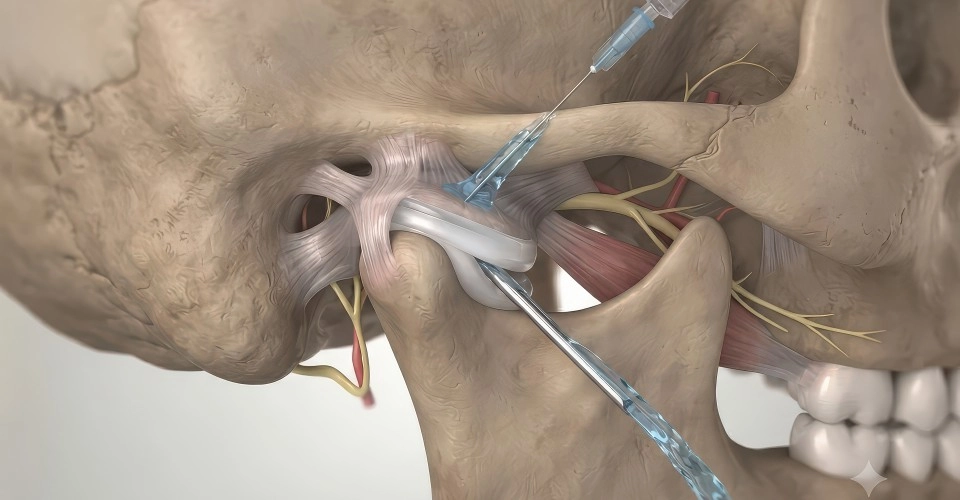
When conservative treatments do not provide adequate relief, an oral and maxillofacial surgeon can evaluate whether additional procedures may be appropriate. Minimally invasive treatments such as TMJ arthrocentesis or TMJ injections may be recommended for certain patients. Arthrocentesis involves gently flushing the joint space with sterile fluid to remove inflammatory substances, improve mobility, and reduce pain. These procedures are performed using advanced techniques designed to minimize discomfort and support faster recovery.
Advanced Surgical Options & Precision Planning
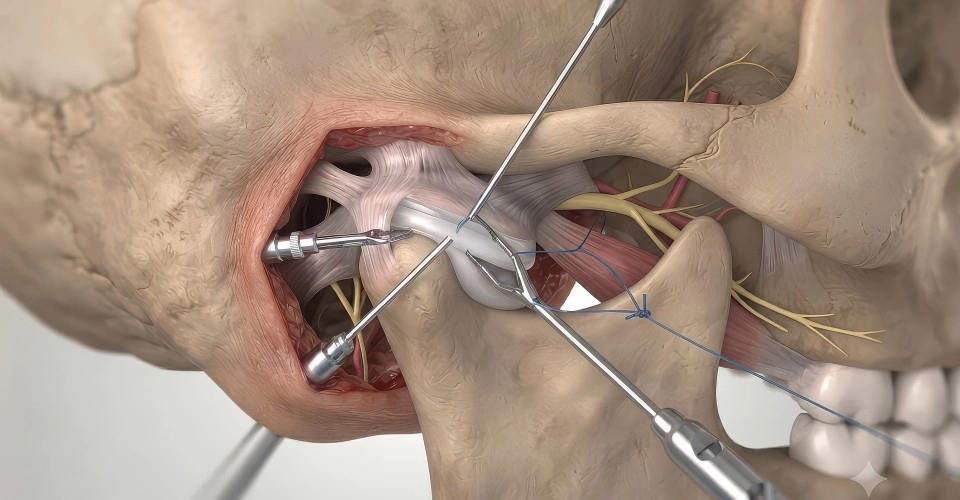
For patients with more advanced joint damage, surgical treatment may be considered. Depending on the condition of the joint, surgical options may include procedures to repair damaged tissue, remove abnormal growths, reposition joint structures, or replace the joint with a custom-designed prosthetic implant in severe cases. Your oral surgeon will carefully evaluate your condition and discuss all available treatment options before recommending surgery.
Advanced imaging and digital treatment planning play an important role in modern TMJ care. Detailed imaging allows your surgeon to examine the complex anatomy of the jaw joint, identify structural abnormalities, and create a personalized treatment strategy. This precision helps improve outcomes while ensuring that treatment is focused on addressing the specific cause of your symptoms.
Individualized Care, Early Evaluation & Restoration of Comfort
TMJ treatment is highly individualized because every patient's symptoms, anatomy, and underlying causes are different. Some patients may require only minor adjustments and conservative therapy, while others may benefit from more advanced surgical intervention. The goal of treatment is always the same: to reduce pain, restore comfortable jaw movement, improve function, and protect the long-term health of the jaw joint.
Ignoring persistent TMJ symptoms can allow underlying problems to progress. Chronic inflammation, untreated joint damage, or changes in jaw mechanics may contribute to worsening discomfort and reduced quality of life. Seeking an evaluation from an experienced oral and maxillofacial surgeon can help identify the cause of your symptoms and determine the most appropriate path toward relief.
Whether you are experiencing jaw pain, clicking and popping, limited movement, headaches, or difficulty chewing, our team provides comprehensive TMJ evaluation and treatment using advanced diagnostic technology and proven surgical techniques. Through personalized care and a focus on restoring both comfort and function, we help patients regain normal jaw movement and improve their overall quality of life.