
SLEEP APNEA EVALUATION & TREATMENT
Comprehensive Evaluation & Advanced Airway Assessment
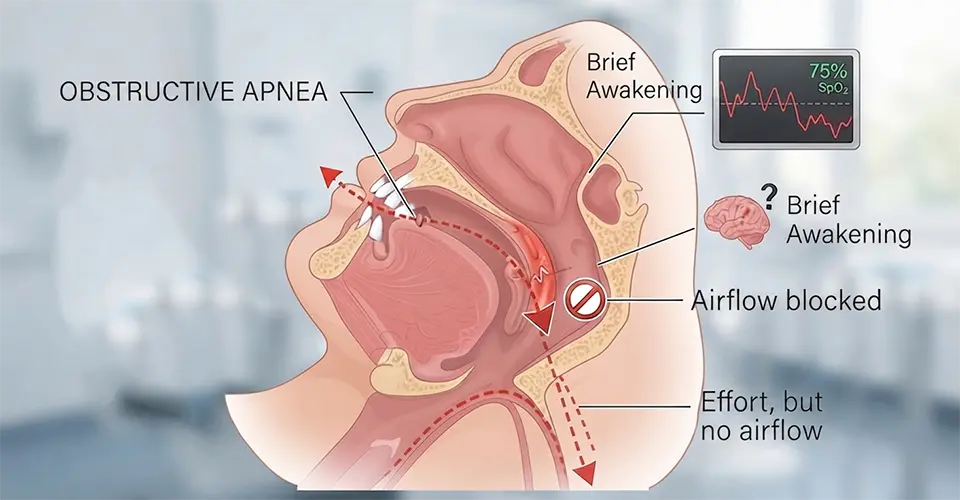
A comprehensive sleep apnea evaluation begins with a detailed review of your symptoms, medical history, sleep patterns, and airway anatomy. Your oral and maxillofacial surgeon may evaluate jaw position, facial structure, tongue position, airway dimensions, and other factors that can contribute to airway obstruction. Advanced imaging, including 3D CBCT scans, may be used to assess airway anatomy and assist with treatment planning.
Non-Surgical Options & Surgical Treatment for Structural Causes
Treatment for sleep apnea depends on the severity of the condition and the underlying cause. Many patients begin treatment with non-surgical approaches such as lifestyle modifications, positive airway pressure therapy (CPAP), or oral appliance therapy. Oral appliances work by repositioning the jaw or tongue to help maintain a more open airway during sleep and may be an effective option for certain patients with mild to moderate obstructive sleep apnea.
For patients whose sleep apnea is related to jaw position or facial skeletal structure, surgical treatment may be recommended. Oral and maxillofacial surgeons perform advanced procedures designed to improve airway space and address anatomical causes of obstruction. These procedures may include corrective jaw surgery (orthognathic surgery), which repositions the upper and lower jaws to improve airway dimensions and create a more favorable relationship between facial structures.
Maxillomandibular Advancement (MMA) & Virtual Surgical Planning
Maxillomandibular advancement (MMA) is one of the most effective surgical procedures for treating certain cases of obstructive sleep apnea. During MMA surgery, the upper jaw (maxilla) and lower jaw (mandible) are carefully repositioned forward, which can enlarge the airway and reduce the likelihood of collapse during sleep. This procedure is highly specialized and requires advanced training in facial skeletal surgery and airway management.
3D imaging and virtual surgical planning have transformed the way sleep apnea surgery is evaluated and performed. These technologies allow your oral surgeon to analyze airway anatomy, simulate surgical movements, and develop a customized treatment plan based on your unique facial structure. This detailed planning improves precision and helps create more predictable results.
Coordinated Care, Health Benefits & Specialized Solutions
For patients considering surgical treatment, a coordinated approach is often beneficial. Oral and maxillofacial surgeons may work closely with sleep medicine physicians, ENT specialists, orthodontists, and other healthcare providers to ensure that all aspects of the condition are properly evaluated and treated. This collaborative approach helps patients receive comprehensive care designed around their specific needs.
Improving sleep apnea can have a profound impact on daily life. Effective treatment may help patients experience better sleep quality, increased daytime energy, improved concentration, reduced snoring, and improved overall health. Addressing the underlying cause of airway obstruction can provide benefits that extend far beyond simply getting a better night's rest.
If you experience symptoms of sleep apnea or have been diagnosed but continue to struggle with treatment, an evaluation with an experienced oral and maxillofacial surgeon may help identify additional options. Through advanced imaging, personalized treatment planning, and specialized surgical expertise, our team can help determine the most appropriate approach for improving airway function and restoring healthier sleep.
Sleep apnea is more than a sleep problem; it is a condition that can affect your health, comfort, and quality of life. With modern diagnostic tools, advanced surgical techniques, and a patient-focused approach, oral and maxillofacial surgeons provide specialized care for patients seeking effective solutions for obstructive sleep apnea and related airway concerns.