
JAW SURGERY
Understanding Jaw Surgery & Orthognathic Care
Jaw surgery, also known as orthognathic surgery, is a specialized procedure performed by oral and maxillofacial surgeons to correct irregularities of the jaw bones and improve the relationship between the upper jaw, lower jaw, and teeth. When the jaws do not develop properly or become misaligned due to injury or other conditions, patients may experience difficulty chewing, speaking, breathing, or maintaining proper oral function. Jaw surgery can restore balance, improve facial harmony, and create a healthier, more functional bite.
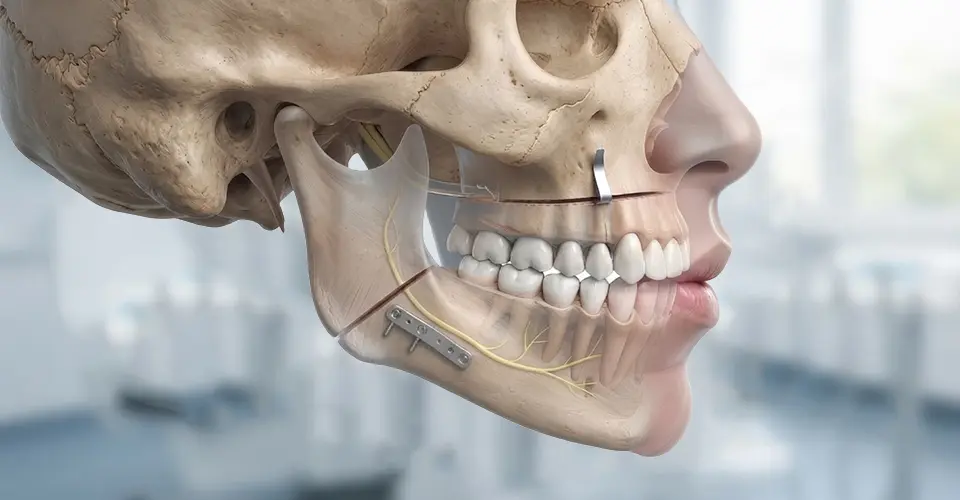
Specialized Training & Growth Discrepancies
Oral and maxillofacial surgeons are uniquely qualified to perform corrective jaw surgery because of their extensive training in both dental and facial skeletal surgery. Treatment requires a detailed understanding of how the teeth, jaws, muscles, facial bones, and soft tissues work together. Through advanced evaluation and digital treatment planning, your surgeon can develop a personalized surgical approach designed to improve both function and facial aesthetics.
Jaw alignment problems can develop for many different reasons. Some patients are born with differences in jaw growth or facial development, while others develop problems following facial trauma, congenital conditions, or significant changes in jaw structure. Common concerns that may indicate a need for jaw surgery include an underbite, overbite, open bite, facial asymmetry, difficulty closing the lips comfortably, excessive jaw strain, or a bite that cannot be corrected through orthodontics alone.
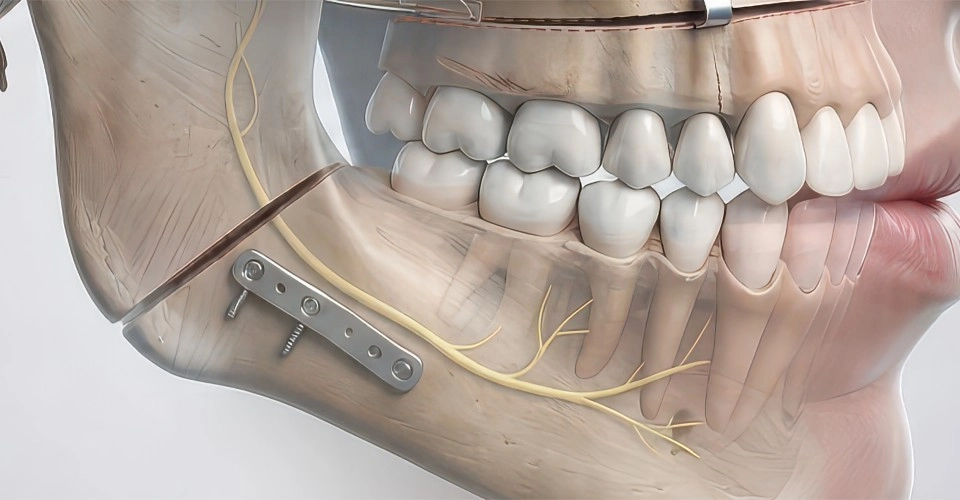
Functional Concerns & Comprehensive Evaluation
Many patients with jaw irregularities experience more than cosmetic concerns. An improperly positioned jaw can affect everyday activities such as eating, speaking, and maintaining proper oral hygiene. It may also contribute to uneven tooth wear, jaw discomfort, headaches, gum problems, and strain on the temporomandibular joints (TMJ). Corrective jaw surgery addresses the underlying skeletal issue rather than only treating the visible symptoms.
The jaw surgery process begins with a comprehensive evaluation that includes a detailed examination, digital photographs, bite analysis, and advanced 3D imaging. Cone beam computed tomography (CBCT) allows your oral surgeon to evaluate the position of the jaws, teeth, nerves, and surrounding structures with exceptional precision. This information is combined with digital treatment planning to determine the ideal surgical movements and create a predictable path toward improved function and facial balance.
Orthodontic Coordination & Surgical Precision
Orthognathic surgery is often performed in coordination with orthodontic treatment. In many cases, braces or clear aligners are used before surgery to properly position the teeth so they will fit together correctly after the jaws are repositioned. Following surgery, additional orthodontic treatment may be needed to fine-tune the bite and achieve the best possible long-term result. Your oral surgeon and orthodontist work together throughout the process to ensure comprehensive care.
During jaw surgery, the oral surgeon carefully repositions the upper jaw, lower jaw, or both depending on the patient's specific needs. The bones are precisely adjusted and secured using small titanium plates and screws that provide stability while healing occurs. These fixation devices are biocompatible and typically remain in place permanently. The goal is to create a balanced relationship between the jaws while improving chewing ability, speech, facial symmetry, and overall quality of life.
Indications, Virtual Planning & Recovery
Patients may benefit from corrective jaw surgery for a variety of conditions, including severe overbite, underbite, crossbite, open bite, facial imbalance, jaw growth abnormalities, airway concerns, or trauma-related jaw deformities. In some cases, jaw surgery may also improve breathing and sleep-related issues when the position of the jaws contributes to restricted airway space.
Modern advances in surgical techniques and digital planning have made jaw surgery more precise and predictable than ever before. Virtual surgical planning allows your surgeon to simulate jaw movements before treatment begins, evaluate different treatment options, and develop a customized surgical guide. This technology improves accuracy and helps patients better understand their expected results before undergoing surgery.
Recovery from jaw surgery varies depending on the complexity of the procedure and the number of jaw structures being treated. Swelling and discomfort are common during the initial healing period, but symptoms gradually improve over time. Patients typically follow a modified diet while the jaws heal and slowly return to normal activities as recommended by their surgical team. Detailed post-operative instructions and follow-up appointments help ensure a smooth recovery.
Aesthetic Improvements & Lifelong Results
Beyond improving the way the jaws function, corrective jaw surgery can create significant improvements in facial appearance and confidence. Proper jaw alignment can enhance facial proportions, improve symmetry, and create a more natural relationship between the teeth, lips, and surrounding facial structures. Many patients experience life-changing improvements in comfort, confidence, and daily function following treatment.
Choosing an experienced oral and maxillofacial surgeon is an important step when considering corrective jaw surgery. Because the procedure involves complex facial anatomy and precise surgical movements, specialized training and advanced technology are essential for achieving successful outcomes. Your surgeon will carefully evaluate your needs, explain your options, and guide you through every stage of the treatment process.
Corrective jaw surgery offers a long-term solution for patients whose jaw alignment affects their health, function, or confidence. By combining advanced surgical techniques, digital planning, and personalized care, oral and maxillofacial surgeons can restore proper jaw function, improve facial balance, and help patients achieve a healthier, more comfortable smile that lasts a lifetime.