
DENTAL IMPLANTS
The Importance of Replacing Missing Teeth
Your teeth affect your whole body. When they’re healthy, you’re healthier too. A missing tooth can impact your bite, speech, and eating choices. As you rely more on your remaining teeth, you increase the chance they will wear out prematurely, or be damaged or lost. You may also experience headaches and/or jaw pain.
Who would want their appearance and health to deteriorate? That’s the natural consequence of missing teeth—the jaw literally melts away. Generally, people will lose 25% of their supporting jawbone structure within the first year after tooth loss. Dental implants are more easily placed when teeth are first extracted because bone replacement becomes more complex as time passes. The great news? Implants act just like your natural teeth, safeguarding and preserving your bone structure, oral health, and appearance. Your dentist and implant surgeon will provide you with options so that you can make the most informed decision concerning your tooth replacement.
What Are Dental Implants?
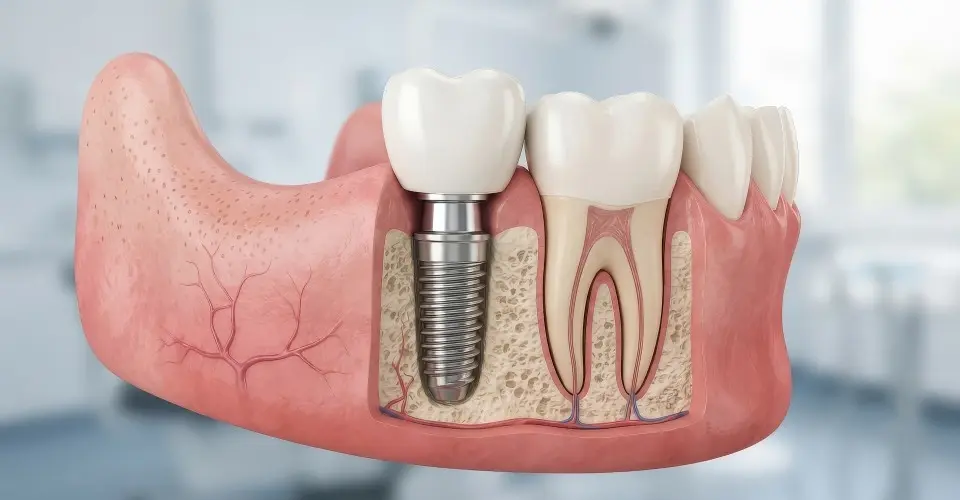
A natural tooth consists of a root and a crown. If you compare natural teeth to implant-supported replacement teeth, you’ll see they share the same basic parts. Both have a crown (the visible part used to chew food), and both have a root that holds the tooth securely under the gum and anchored into the jaw. The difference is that a dental implant root is made of titanium—the same time-tested material used by surgeons for artificial joints.
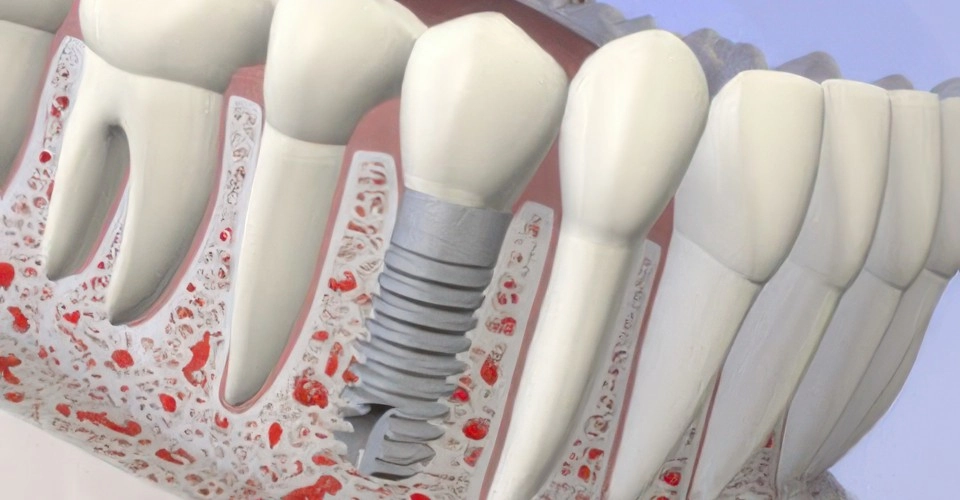
When you lose a tooth, you lose both the root and the crown. To replace it, the surgeon first replaces the root with a small dental implant. Time is then allowed for bone to heal and grow around the implant. The bone bonds with the titanium, creating a strong foundation for your artificial teeth. A support post (abutment) is placed on the implant, and a new replacement tooth (crown) is secured on top. In many cases, a temporary replacement tooth can even be attached immediately after the implant is placed. If all of your teeth are missing, a variety of treatment options are available to support full arches of replacement teeth.
Why Select Dental Implants Over Traditional Restorations?
There are several distinct reasons to choose implants over older methods. A traditional dental bridge requires sacrificing the structure of surrounding healthy teeth just to bridge the gap of the missing teeth. In addition, removing a denture or partial at night can be inconvenient, and removable dentures that slip can cause discomfort and social embarrassment.
Tooth Replacement Options & Candidacy
You can select from a number of different options to replace your missing teeth—ranging from temporary solutions to long-lasting restorations.
A good candidate is anyone missing one or more teeth, or anyone who is unhappy with their dentures. Age is not a limiting factor. However, smoking, certain health conditions such as diabetes, and radiation therapy to the head or neck area have been shown to lower the success rate of implant placement. X-rays of your jaw will be taken to evaluate whether your bone structure will accommodate implants, and detailed scans may be required to determine if additional procedures are necessary to place implants properly.
Surgical Advances
Using the most recent advances in dental implant technology, Dr. Byron Black and Dr. William Black are able to place single-stage implants. These implants do not require a second procedure to uncover them, though they do require a minimum healing period before artificial teeth are attached. In certain situations, an implant can even be placed at the exact same time as a tooth extraction, further minimizing your overall number of surgical procedures.
A Collaborative Team Effort
Dental implant placement is a team effort between an oral and maxillofacial surgeon and a restorative dentist. Dr. Byron Black or Dr. William Black performs the actual implant surgery, initial tooth extractions, and any necessary bone grafting. Meanwhile, your restorative dentist fits and crafts the permanent prosthesis, as well as any temporary prostheses needed throughout the implant process.