
CLEFT LIP & PALATE
Understanding Cleft Conditions & Specialized Care
Cleft lip and cleft palate are congenital conditions that occur when the tissues of the lip and/or roof of the mouth do not fully join together during early fetal development. These conditions can affect the appearance of the face, the function of the mouth, speech development, feeding ability, dental growth, and overall oral health. Treatment requires specialized, coordinated care from a team of healthcare professionals, including oral and maxillofacial surgeons who play an important role in restoring facial structure, jaw development, and oral function.
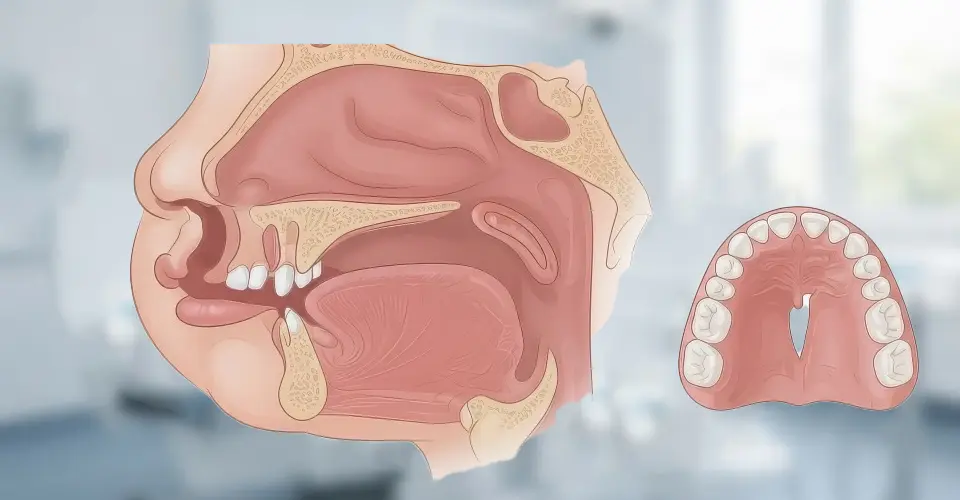
Advanced Training & Types of Cleft Conditions
Oral and maxillofacial surgeons are highly trained in the surgical correction of facial and jaw conditions, making them an essential part of comprehensive cleft care. Because cleft conditions involve complex relationships between the lips, palate, teeth, jaws, and facial bones, treatment requires an in-depth understanding of facial growth and development. Our goal is to help patients achieve improved function, facial balance, and confidence through personalized surgical care.
A cleft lip occurs when the tissues that form the upper lip do not completely fuse during development, resulting in an opening or separation in the lip. A cleft palate occurs when the tissues that form the roof of the mouth do not fully join, creating an opening between the mouth and nasal cavity. Some children are born with only a cleft lip, only a cleft palate, or both conditions together. The severity and location of the cleft can vary significantly from patient to patient.
Functional Impacts & Staged Treatment Approach
Cleft conditions can affect more than appearance alone. Children with cleft lip and palate may experience challenges with feeding, speech development, hearing, dental eruption, and proper jaw growth. Early evaluation and coordinated treatment are essential to address these concerns and support healthy development throughout childhood and adolescence.
Treatment for cleft lip and palate typically involves multiple stages that correspond with the child's growth and development. Surgical care often begins during infancy with repair of the cleft lip and later repair of the palate. As the child grows, additional procedures may be recommended to improve jaw development, dental alignment, speech function, facial symmetry, and overall oral health.
Cleft Lip & Palate Repair Procedures
During cleft lip repair, the oral and maxillofacial surgeon carefully reconstructs the tissues of the lip to restore natural shape, symmetry, and function. The procedure requires precise surgical technique to align the muscles and soft tissues while creating the most natural possible appearance. Proper repair also supports normal facial movement and future development.
Cleft palate repair focuses on closing the opening between the mouth and nasal cavity while restoring the muscles necessary for proper speech and swallowing. Successful palate repair helps improve oral function, supports speech development, and reduces communication between the oral and nasal passages. Timing of surgery is carefully planned based on the child's individual growth and developmental needs.
Alveolar Bone Grafting & Corrective Jaw Surgery
As children with cleft conditions continue to grow, additional oral and maxillofacial surgical procedures may be needed. One common procedure is alveolar bone grafting, which involves placing bone into the area of the gum line where the cleft affected normal bone development. This creates a stable foundation for permanent teeth to erupt properly and can support future orthodontic treatment and dental function.
Some patients with cleft conditions may also require corrective jaw surgery later in adolescence or adulthood. Because cleft lip and palate can influence the growth relationship between the upper and lower jaws, some individuals develop bite problems, facial imbalance, or difficulty with jaw function. Orthognathic surgery can reposition the jaws to improve chewing ability, facial harmony, airway function, and overall quality of life.
3D Imaging, Multidisciplinary Teamwork & Personalized Care
Advanced imaging technology plays an important role in modern cleft treatment. Three-dimensional CBCT imaging allows the surgical team to evaluate bone development, tooth position, facial structures, and areas affected by the cleft. This information supports precise treatment planning and helps coordinate care between oral surgeons, orthodontists, pediatric dentists, speech specialists, and other members of the cleft care team.
Cleft lip and palate treatment is a long-term process that requires collaboration between multiple specialists. Oral and maxillofacial surgeons often work alongside plastic surgeons, orthodontists, pediatric dentists, speech therapists, otolaryngologists (ENT specialists), and other healthcare providers. This team-based approach ensures that patients receive comprehensive care addressing both functional and aesthetic concerns at every stage of development.
Every patient with a cleft condition has unique needs, and treatment plans are carefully customized based on the type of cleft, facial growth pattern, dental development, and individual goals. Advances in surgical techniques, digital planning, and regenerative procedures have continued to improve outcomes, allowing many patients to achieve excellent function, facial appearance, and quality of life.
Cleft lip and palate care requires specialized surgical expertise, long-term planning, and compassionate support throughout each phase of treatment. Through advanced oral and maxillofacial surgical techniques and coordinated multidisciplinary care, patients with cleft conditions can achieve improved oral function, healthier facial development, and the confidence that comes with a restored smile.